On 6 February 2011
The Hervormde Gemeente and the Gereformeerde Kerk of Nieuwveen merge into a single Protestant congregation.
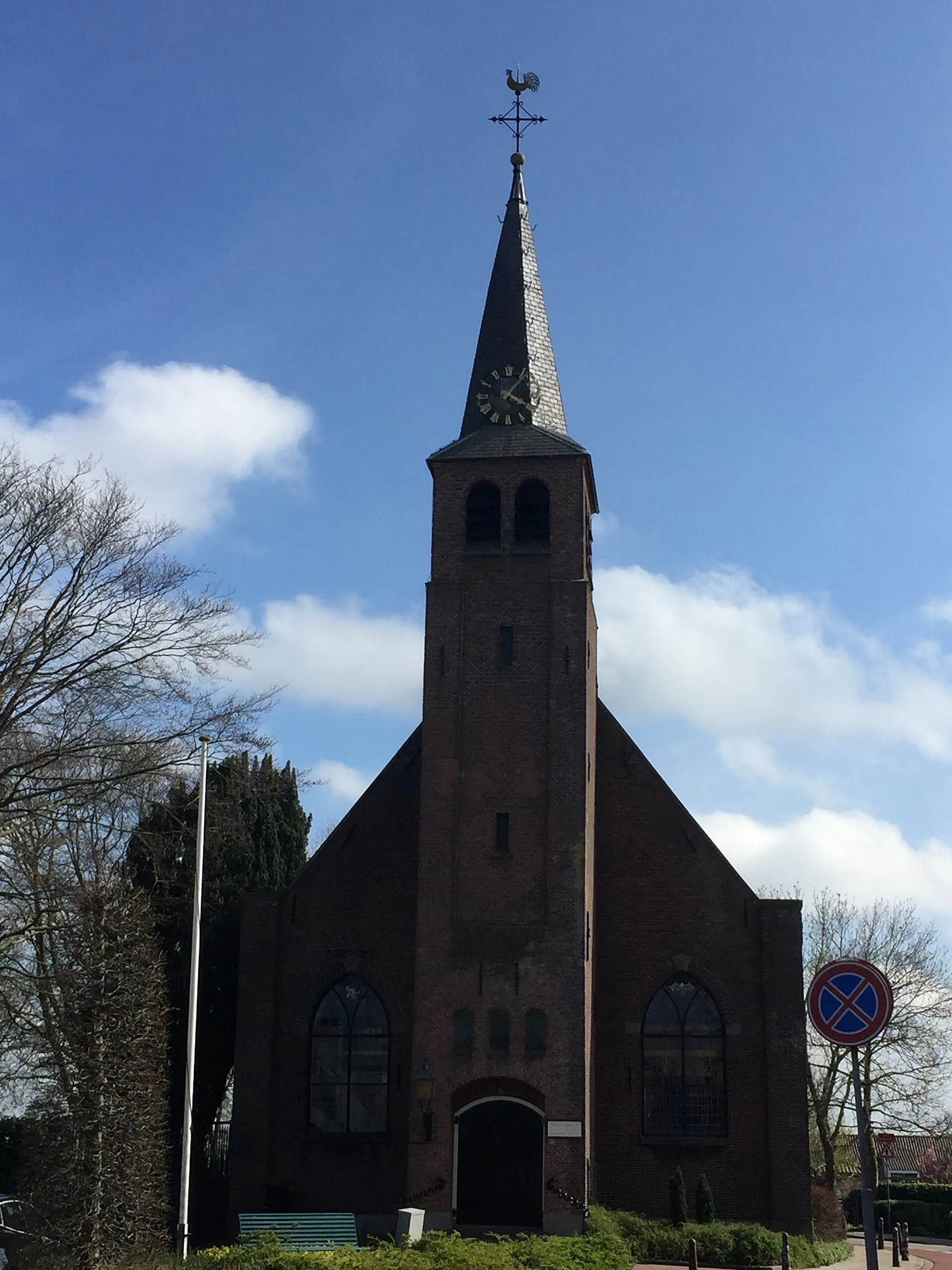
Services are henceforth held in the former Reformed church on the Kerkstraat, completed in 1832, which on the merger is given the name "DE ONTMOETINGSKERK", the Meeting Church. The Gereformeerde church building taken into use in 1895 thereby loses its function.
Provenance This line was not in the typed document. It was looked up in public sources afterwards and added.
On this spot
Ontmoetingskerk (formerly the Reformed church)
- 1559 In the year 1559
- 1578 In the year 1578
- 1831 In 1831
- 1831 On 14 July 1831
- 1832 On 22 April 1832
- 1858 In 1858
- 1929 In 1929
Connected to this
Other events sharing these topics.
In the year 1306
By this date a small Roman Catholic church already stands on the Kerkstraat (Church Street).
On 21 July 1331
The oldest firm mention of the village name. Count Willem III grants permission to sell "die leenacker legghende bi der kerc lane te Nuwenvene" — the fief-field lying by the church lane at Nuwenvene. Both the name Nuwenvene and the Kerkstraat – then "der kerc lane" – are therefore on record in 1331.
The medieval church was dedicated to Saint Nicholas and was in the gift of the Counts of Holland.
On 13 October 1357
Count Willem states that he has no objection to the exchange of Willem van Schade, priest at Nieuwveen, with one Servaas, priest at Bunschoten.
In the year 1559
A new Roman Catholic church goes up on the Kerkstraat, replacing the small one already there. The old church was dedicated to St Anne; the new one took St Nicholas as its patron.
In the year 1578
The Reformation reaches Nieuwveen. The 1559 church on the Kerkstraat passes into Reformed hands. The village's Catholics from now on belong to the parish of Zevenhoven.
In 1831
The church on the Kerkstraat, built by the Catholics in 1559 and Reformed since 1578, is pulled down.
A likely cause of the building's poor condition is the draining of the polder twenty years earlier: the church stood on the edge of the drained polder, and its foundations subsided.