Nieuwveen
A thousand years,
five metres under water.
Nieuwveen sits on the bed of a lake that was pumped dry in 1810. The village next door, Schoot, drowned. This one did not — and it has been pumped every day since to keep it that way.
- Timeline
- 976 years
- inhabitants
- 4.559
- places
- 20
- entries
- 137
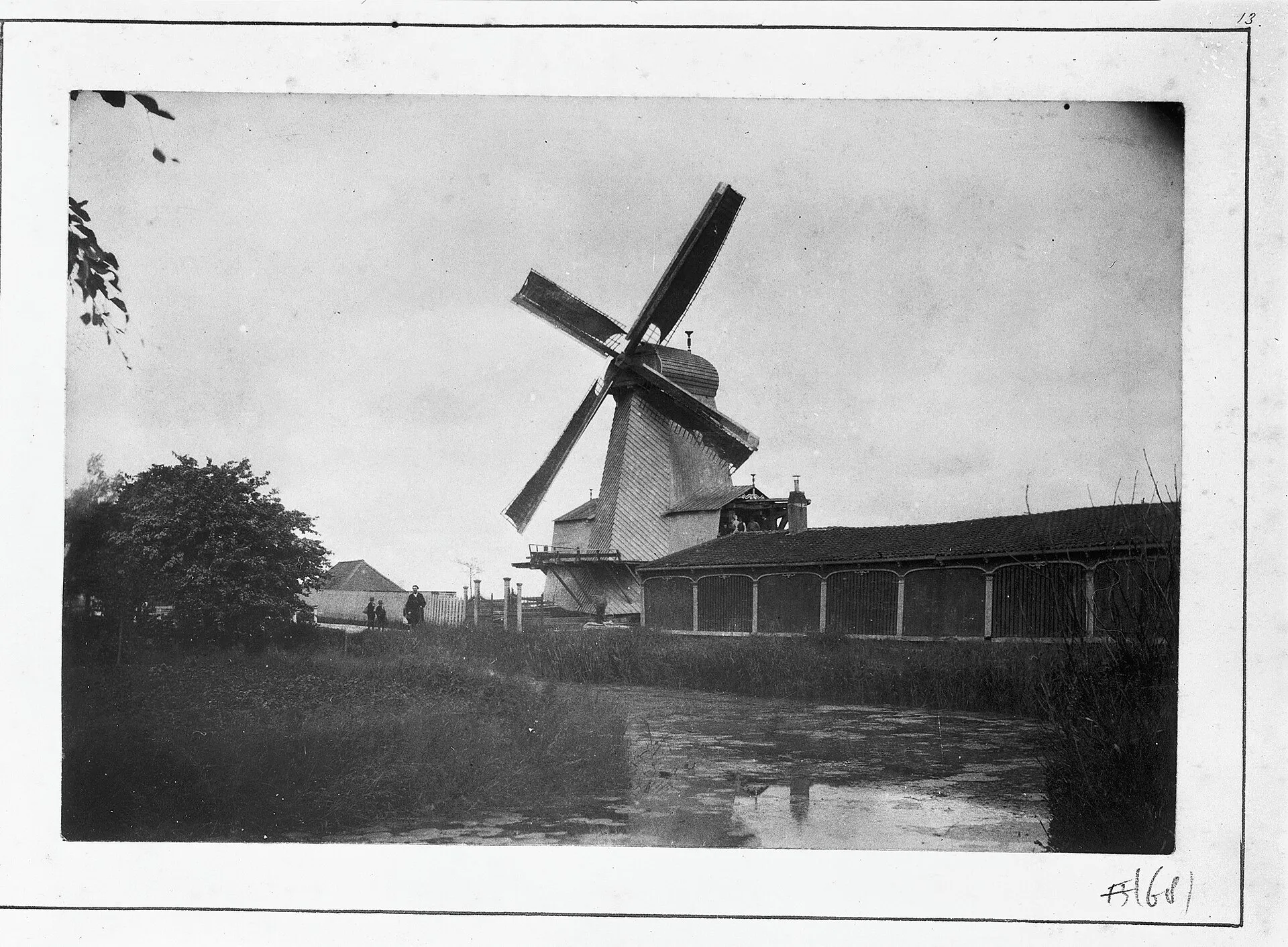
Two pictures
the water, and what held it back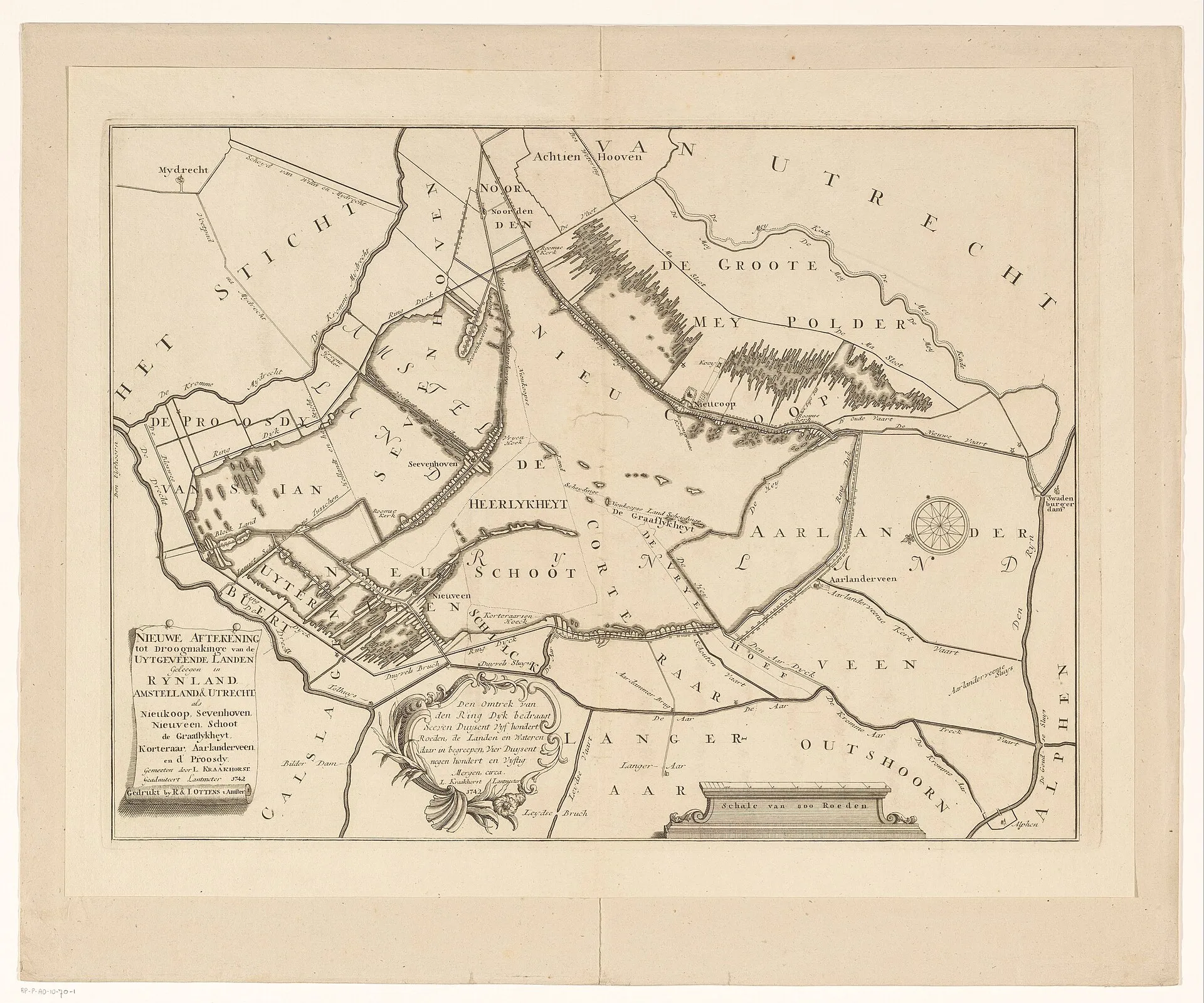
Small things
I could not leave outThe first bicycle with pneumatic tyres
Sold to the municipal clerk, W. van der Vos. Somebody thought it mattered enough to record who bought it, and from whom.
c. 1700The village next door drowned
Schoot and the Uiterbuurt went under the water of the peat lakes. Nieuwveen was only just spared.
1886The priest paid for his own tower
J.J. Bruijstens put up the money himself. Forty-eight metres, cross included.
1823–1825From Duivelsbrug to Kattenbrug
The old bridge was the Devil’s Bridge. The new one was called the Cat Bridge. Why, the document does not say.
1867A row about street lamps
The first paraffin lighting only came after a stubborn fight in the council. The village was sharply split into those for and those against.
Seven eras
from peat to heat network- 1050 – 1640 Origins and the Middle Ages 11 events
- 1700 – 1800 The eighteenth century: decline 6 events
- 1800 – 1898 The drainage and the rebuilding 34 events
- 1900 – 1937 The twentieth century up to the war 35 events
- 1940 – 1945 The Second World War 6 events
- 1945 – 1970 After 1945 27 events
- 1972 – 2026 From a village with its own municipality to a settlement of Nieuwkoop 18 events
Connected, and disconnected again
In 1970 Nieuwveen was connected to the mains gas network and the coal stoves went out of the door. Fifty years later a heat network is being laid at Schoterhoek II, running on treated wastewater, and the industrial estate is being developed entirely without gas. The two entries sit at opposite ends of the timeline.
What we don’t know
and that counts for something tooA village with loose ends.
For some questions I simply found no answer. They are here, rather than filled in with something that merely sounds plausible.
- Whether the folder that was found is Roovers’ own working draft, or a copy someone typed from the printed booklet.
- How the folder came into this family.
- Where the two parts are that the foreword announces after the dates: a set of loose topics, and a list of old Nieuwveen names and terms.
- The name of the third Jewish resident deported in 1943. We know the other two.
Do you know one of them? The Historische Kring Liemeer at Kerkstraat 31 — or me.
1940 – 1945
The Second World War
Roovers writes that Nieuwveen was spared any fighting. In military terms that is correct. The village nonetheless lost inhabitants to the occupation.
Three Jewish residents of the Johannesstichting were deported in 1943 and murdered at Sobibor. Willem Pieter Speelman was executed by firing squad at Halfweg on 17 February 1945, twenty-six years old.
Read this era