Around the eleventh century
The source says "omstreeks", "begin" or "na" — around, early in, or after: the year is not exact.
The first inhabitants settle in the area around Nieuwveen. They begin draining the peat soil and bringing it into cultivation, so that it slowly becomes fit for arable farming and cattle.
Provenance This line was not in the typed document. It was looked up in public sources afterwards and added.
On this spot
Nieuwveen (village centre)
- c. 1200 Around the year 1200
- c. 1300 Around the year 1300
- 1628 In 1628
- c. 1700 In the second half of the 1700s
- 1724 In the year 1724
- 1724 In the year 1724
- 1745 In 1745
- c. 1750–1800 From around 1750 to 1800
- 1800 In the year 1800
- 1809 In 1809
- 1810 In 1810
- 1810–1812 Between 1810 and 1812
- 1812–1850 Between 1812 and 1850
- 1846 In 1846
- 1867 In 1867
- 1870 On 4 May 1870
- c. 1873 Around 1873
- 1894 In 1894
- 1898 In 1898
- c. 1900 Early 1900s
- c. 1910 Around 1910
- c. 1914 Around 1914
- 1921 In 1921
- 1922 In the year 1922
- 1922 In 1922
- 1923 In 1923
- 1923 On 3 September 1923
- 1924 On 16 May 1924
- 1927 In 1927
- 1927 In 1927
- 1932 In 1932
- 1936 In 1936
- 1937 On 15 April 1937
- 1940–1945 Between 1940 and 1945
- c. 1940–1945 During the war years
- 1942 In 1942
- c. 1945 After the year 1945
- 1945 On 17 February 1945
- 1952 In 1952
- 1953 In 1953
- 1969 On 14 November 1969
- 1970 In 1970
- 1970 In 1970
- 1970 And then lastly in 1970
- 1988 On 1 January 1988
- 1989 On 1 January 1989
- 1991 On 1 January 1991
- 1994 On 1 January 1994
- 2003 In 2003
- 2026 In 2026
Connected to this
Other events sharing these topics.
c. 1300 approximate
Around the year 1300
The ground holds a layer of fen peat, laagveen. Digging it away gets under way.
c. 1700 approximate
In the second half of the 1700s
The water of the peat lakes swallows the neighbouring village of Schoot and the Uiterbuurt. Nieuwveen escapes by a hair.
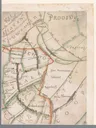 Rijnland in 1615, with Nieuwveen and Nieuwkoop. The map is nearly a century older than the entry beside it, and shows the area before the water had taken so much of the land. View larger →