In the year 1800
Draining of the peat lakes around Nieuwveen begins. Seven windmills set to work pumping the water out into the Amstel.
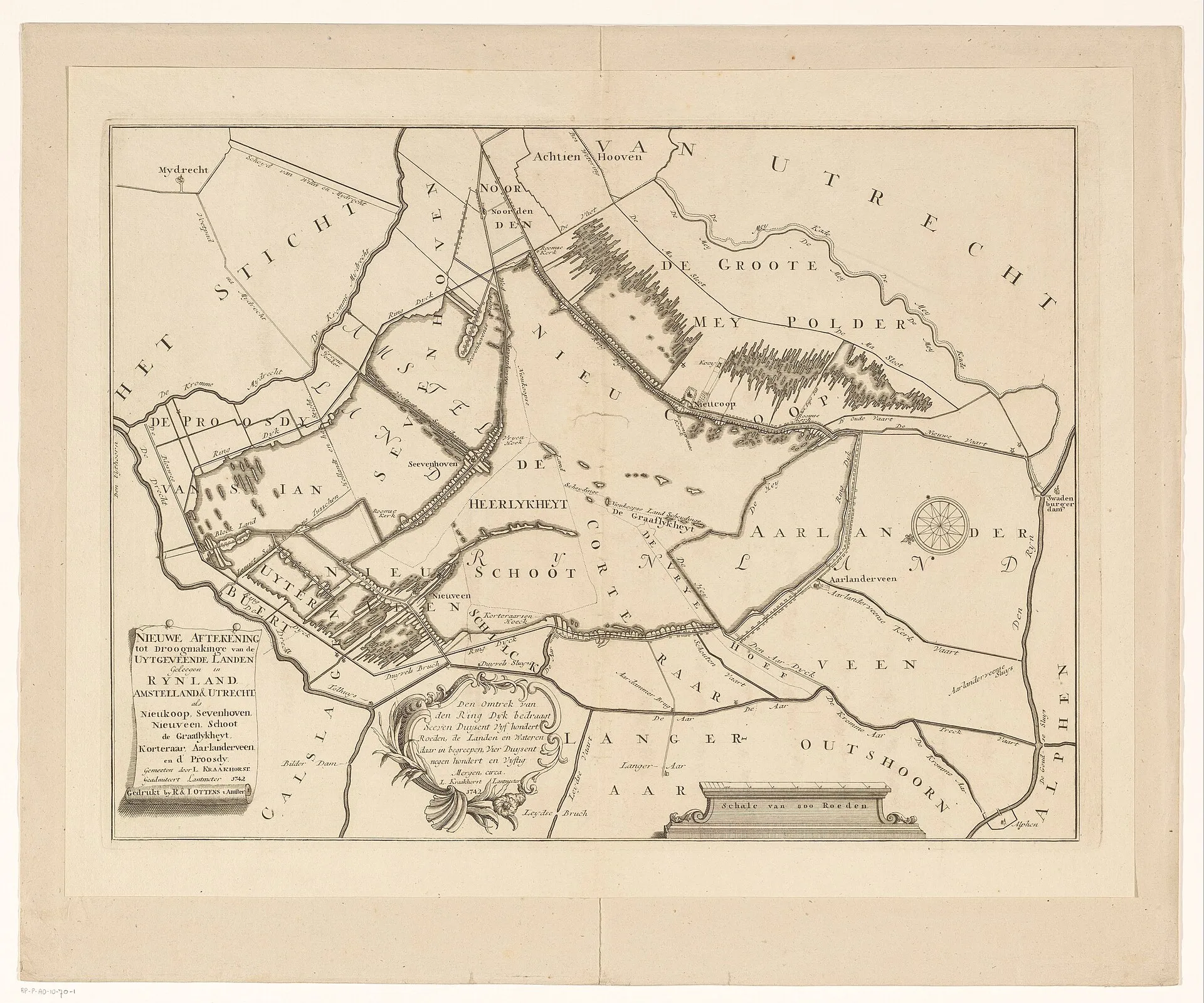
Provenance This comes from the series J.J. Roovers set down up to 1970. The wording here is this site’s own. View the source
On this spot
Nieuwveen (village centre)
- c. 1050–1100 Around the eleventh century
- c. 1200 Around the year 1200
- c. 1300 Around the year 1300
- 1628 In 1628
- c. 1700 In the second half of the 1700s
- 1724 In the year 1724
- 1724 In the year 1724
- 1745 In 1745
- c. 1750–1800 From around 1750 to 1800
- 1809 In 1809
- 1810 In 1810
- 1810–1812 Between 1810 and 1812
- 1812–1850 Between 1812 and 1850
- 1846 In 1846
- 1867 In 1867
- 1870 On 4 May 1870
- c. 1873 Around 1873
- 1894 In 1894
- 1898 In 1898
- c. 1900 Early 1900s
- c. 1910 Around 1910
- c. 1914 Around 1914
- 1921 In 1921
- 1922 In the year 1922
- 1922 In 1922
- 1923 In 1923
- 1923 On 3 September 1923
- 1924 On 16 May 1924
- 1927 In 1927
- 1927 In 1927
- 1932 In 1932
- 1936 In 1936
- 1937 On 15 April 1937
- 1940–1945 Between 1940 and 1945
- c. 1940–1945 During the war years
- 1942 In 1942
- c. 1945 After the year 1945
- 1945 On 17 February 1945
- 1952 In 1952
- 1953 In 1953
- 1969 On 14 November 1969
- 1970 In 1970
- 1970 In 1970
- 1970 And then lastly in 1970
- 1988 On 1 January 1988
- 1989 On 1 January 1989
- 1991 On 1 January 1991
- 1994 On 1 January 1994
- 2003 In 2003
- 2026 In 2026
Connected to this
Other events sharing these topics.
In 1810
The drainage is completed.
The Zevenhoven polder is drained by eight vijzelmolens, Archimedes-screw mills, set up in four "gangs" of two mills each, lifting the water in two stages. The original document speaks of seven mills; the difference probably lies in what exactly was counted as Nieuwveen.
The polder lies deep – the water level is 5.90 metres below NAP, the Dutch ordnance datum – and suffers badly from seepage, which makes daily pumping necessary and keeps it so.
In 1799/1800
The corn mill De Fortuijn is put up on what is now the Uiterbuurtweg.
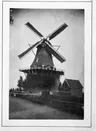 A corn mill in Nieuwveen, from a photograph album. Whether this is “De Fortuijn”, raised in the entry beside it, the source does not say. View larger →
 In 1809
The Nieuwkoop and Zevenhoven droogmakerij – the drained lake-bed polder – becomes a fact. The drainage was a state undertaking.
Between 1810 and 1812
The land won by the draining is parcelled out. For the village it is a fresh start.
In 1846
Nieuwveen gets its first industry: the wind-powered sawmill De Angenieta, near the Kattenbrug, founded by Jeremias Schoenmakers — son of the Reformed minister Pieter Schoenmakers. The Zaagmolenpad (Sawmill Path) is named after this mill.
Around 1873
The wind-driven drainage mills disappear one by one; steam pumping stations elsewhere take over their work.
Not all the mills go this early: the lower mill H of the Zevenhoven polder on the Ringdijk, built in 1810, stands until 1926.
 A mill near Nieuwveen, from an album of 1851–1891 — the years in which the water mills were being cleared away. View larger →