On 1 January 1991
The municipality of Zevenhoven is merged with the municipality of Nieuwveen. The new municipality bears the name Nieuwveen for the time being.
That is the end of the independent existence of the neighbouring municipality with which Nieuwveen even shared a mayor until 1927.
Provenance This line was not in the typed document. It was looked up in public sources afterwards and added.
On this spot
Nieuwveen (village centre)
- c. 1050–1100 Around the eleventh century
- c. 1200 Around the year 1200
- c. 1300 Around the year 1300
- 1628 In 1628
- c. 1700 In the second half of the 1700s
- 1724 In the year 1724
- 1724 In the year 1724
- 1745 In 1745
- c. 1750–1800 From around 1750 to 1800
- 1800 In the year 1800
- 1809 In 1809
- 1810 In 1810
- 1810–1812 Between 1810 and 1812
- 1812–1850 Between 1812 and 1850
- 1846 In 1846
- 1867 In 1867
- 1870 On 4 May 1870
- c. 1873 Around 1873
- 1894 In 1894
- 1898 In 1898
- c. 1900 Early 1900s
- c. 1910 Around 1910
- c. 1914 Around 1914
- 1921 In 1921
- 1922 In the year 1922
- 1922 In 1922
- 1923 In 1923
- 1923 On 3 September 1923
- 1924 On 16 May 1924
- 1927 In 1927
- 1927 In 1927
- 1932 In 1932
- 1936 In 1936
- 1937 On 15 April 1937
- 1940–1945 Between 1940 and 1945
- c. 1940–1945 During the war years
- 1942 In 1942
- c. 1945 After the year 1945
- 1945 On 17 February 1945
- 1952 In 1952
- 1953 In 1953
- 1969 On 14 November 1969
- 1970 In 1970
- 1970 In 1970
- 1970 And then lastly in 1970
- 1988 On 1 January 1988
- 1989 On 1 January 1989
- 1994 On 1 January 1994
- 2003 In 2003
- 2026 In 2026
Connected to this
Other events sharing these topics.
On 1 January 1989
In a local government reorganisation the north-eastern part of the Zevenhoven polder, called "Blokland", is added to the municipality of Nieuwveen. This area previously belonged to the municipality of Mijdrecht in the province of Utrecht.
The population rises as a result to 3,597. The municipality now consists of the settlements of Nieuwveen, Blokland and part of Vrouwenakker.
On 1 January 1994
The municipality is renamed LIEMEER. After centuries the name Nieuwveen disappears from the map as the name of a municipality; the village of course remains.
The municipality of Liemeer comprises Nieuwveen, Zevenhoven, Noorden and Vrouwenakker.
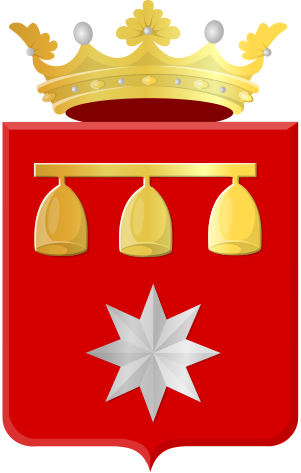
 The municipal flag of 1968. In 1994 the name Nieuwveen disappeared as a municipality, and the flag went with it. View larger →
 On 1 January 2007
The municipality of Liemeer merges with Ter Aar and Nieuwkoop to form the new municipality of NIEUWKOOP. Liemeer still numbered 6,962 inhabitants in November 2006.
The town hall of the new, far larger municipality comes to stand on the Teylersplein in Nieuwveen. The village thereby houses the government of a municipality of nearly 30,000 people – a remarkable sequel to the Raadhuis taken into use on the A.H. Kooistrastraat in 1937.
In the year 1724
Nieuwveen is no longer governed directly. The Counts of Holland did so first, then — until 1724 — the States of Holland.
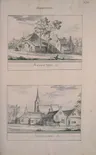 Nieuwveen in the Atlas Schoemaker, eighteenth century — the village as a draughtsman saw it, in the century it was sold as a manor. View larger →
 In the year 1724
For f 15,500,– the heerlijkheid of Nieuwveen — a manorial lordship, carrying rights of jurisdiction and appointment — passes from the States of Holland to the City of Haarlem.
In 1745
Gerrit Willem van der Laan, lord of the manor, transfers the neighbouring ambachtsheerlijkheid of De Uiterbuurt to the City of Haarlem. From this comes the name Nieuwveen met den Uiterbuurt.
 The polders under Kalslagen, Nieuwveen and de Uiterbuurt. De Uiterbuurt, sold as a manor in the entry beside this, is named on the map. View larger →